
On-going works
Light and Disease: Mining-Electrification and Malaria in Africa ( Job-Market)
App Shiny (Senegalese Study: Correlation between Electricity and Malaria) here
📄 See Summary
I study the impact of industrial mine discoveries/openings on malaria incidence in 45 sub-Saharan African countries from 2000 to 2022. Using a difference-in-differences design, I find that mining increases malaria cases by 13 per 1,000 population within 10 km, with spillovers of up to 24 additional cases per 1,000 within 25 km and detectable effects extending to 100 km. These impacts are primarily driven by mining-induced deforestation, which expands mosquito breeding habitat, while improved energy access around mines partially mitigates transmission. As a result, poorer households disproportionately bear the malaria burden, whereas wealthier residents capture most of the electrification gains, implying a regressive distribution of welfare. The findings underscore that the epidemiological footprint of mining is large and spatially diffuse, and that broad-based electrification in surrounding communities may yield both health and economic benefits. Map: Malaria and Electricity Access at DHS cluster levels in SSA 1997-2021
Mining and Power: Darkness or Lighting for Africa?
with Nathan Johnson and Tam Kemabonta Working Paper. Available upon request.
📄See Summary
This study investigates the effect of mining activities involving 32 minerals on energy access (created using population and night lights at 1x1 km of resolution) in sub-Saharan Africa (SSA) from 2000 to 2022. Using georeferenced data in cells of 0.5°×0.5°, we compare energy access in areas with active mines to those with inactive mines, which are defined as sites that were discovered but were never active, serving as our control group. Our results indicate no evidence of active mines on energy access when using inactive mines for comparison. However, when all areas (without mines) are considered as the control group, the impact of mining activities appears significant and positive. Our findings show that regions mining energy-intensive minerals like uranium and cobalt have the lowest energy access. In contrast, those mining less intensive minerals such as gold have higher access rates. Interestingly, cells with Giant and SuperGiant mine sizes have relatively low energy access for local communities. We also investigate how mining affects electricity access using DHS data. Additionally, mining areas exhibit enclave characteristics, with positive spillover effects on nearby regions. Energy access is notably greater in mining locations near generators, power plants, large cities, ports, and key agricultural areas. Our results remain robust when considering the impact of mineral prices on energy access. Map: Discovery Mining (2001-2009) and Population Access of Energy (2000 and 2010)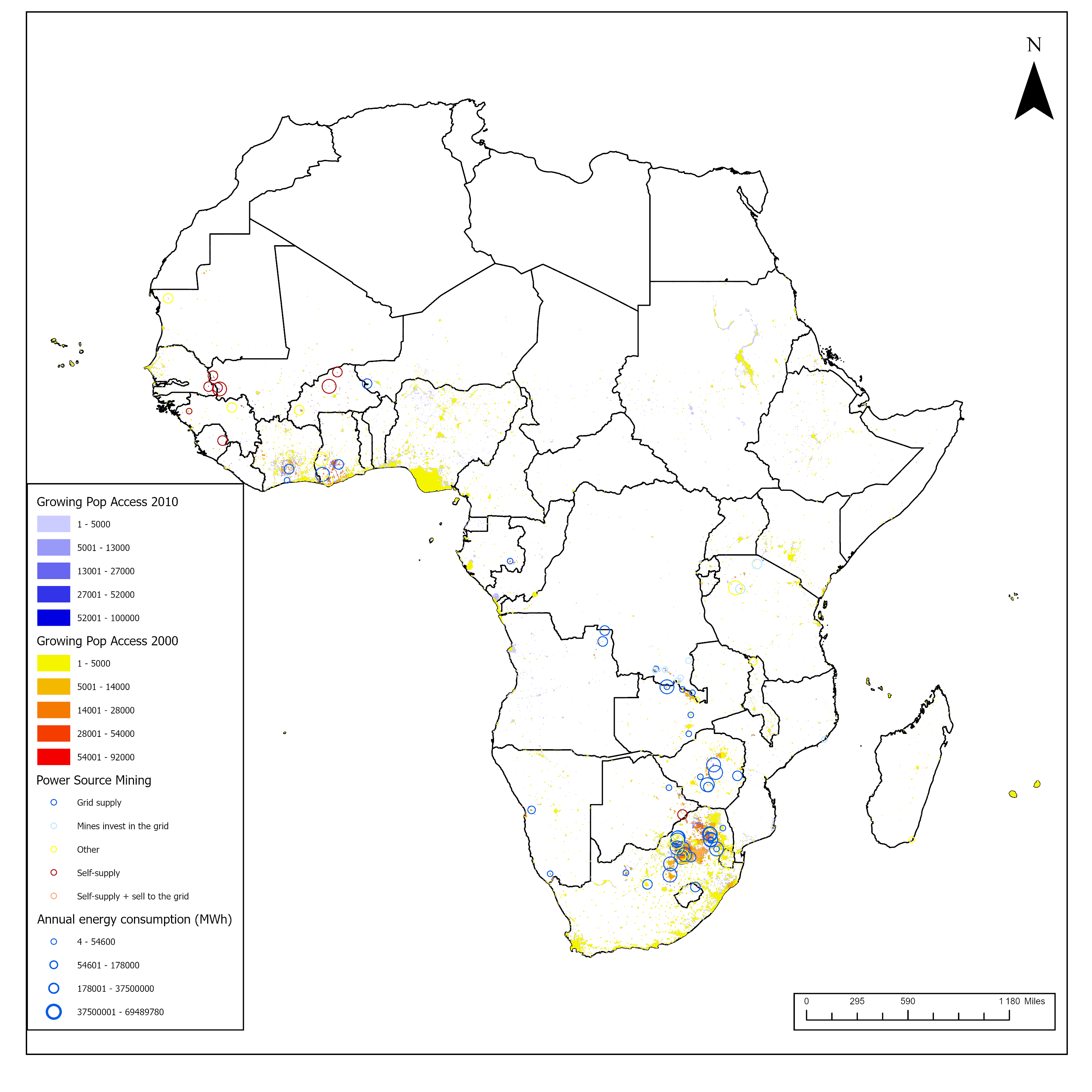 Map: Energy Access from generator locations in SSA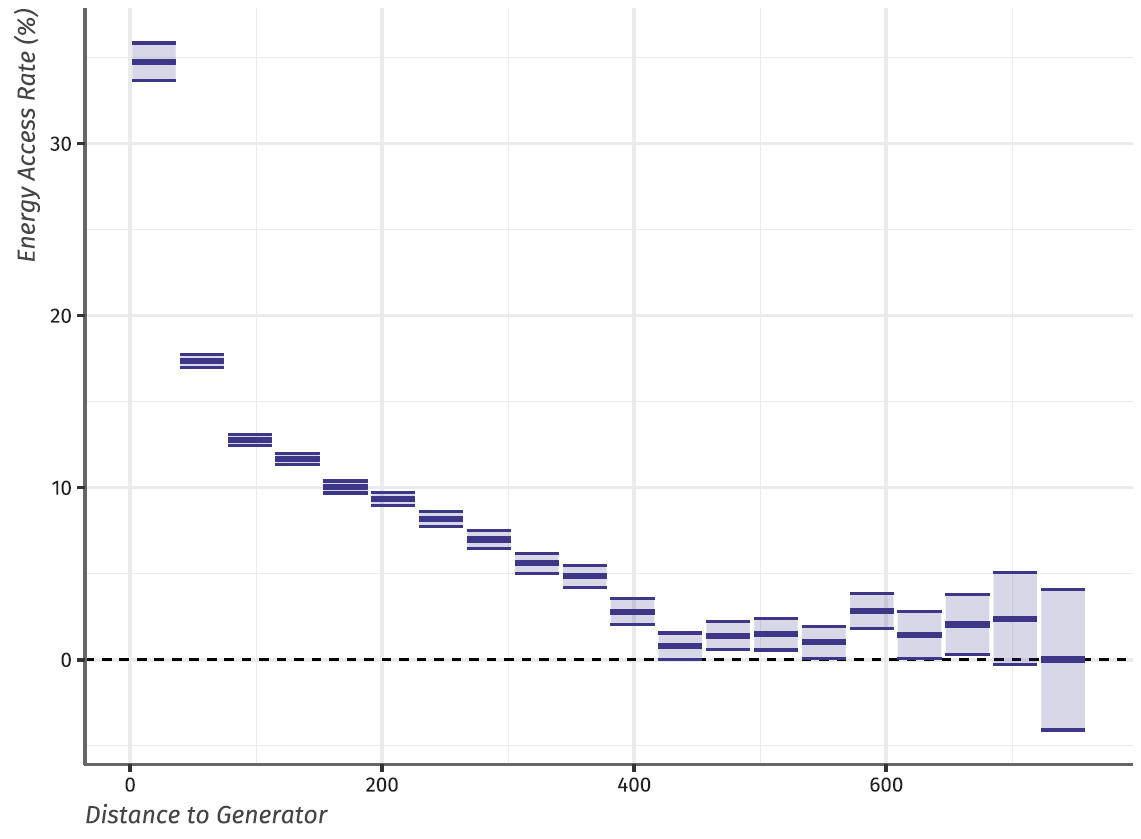
The New Mining Rush: Mineral Discoveries and Social Conflicts in Africa
with Raphael Soubeyran and Ahmed Tritah Working Paper. Available upon request.
📄 See Summary
The global energy transition is crucial but presents social and political challenges, particularly in mineral-rich African countries. This study uses high-resolution data to explore the relationship between mining discoveries and conflict from 1997 to 2022. Using high-resolution remote sensing data combined with a dynamic panel and event-study approach, our findings indicate that conflict increases during exploration, primarily due to protests and riots over gold minerals. This escalation peaks during the Pre-Feasibility and Feasibility stages before continuing to rise after production starts. Conflict patterns vary by mine size, mineral type, and ownership. Mechanism analysis highlights local economic development (local economic activity, electricity access, urbanization, and migration) and environmental degradation (deforestation rate) induced by mining, amplifying the risk of conflict and emphasizing the need for local engagement. Results are consistent across varying specifications, including using mineral prices as a treatment variable and adopting a Synthetic Control Differences-in-Differences design. Map: Number of conflict events in Africa 1997-2021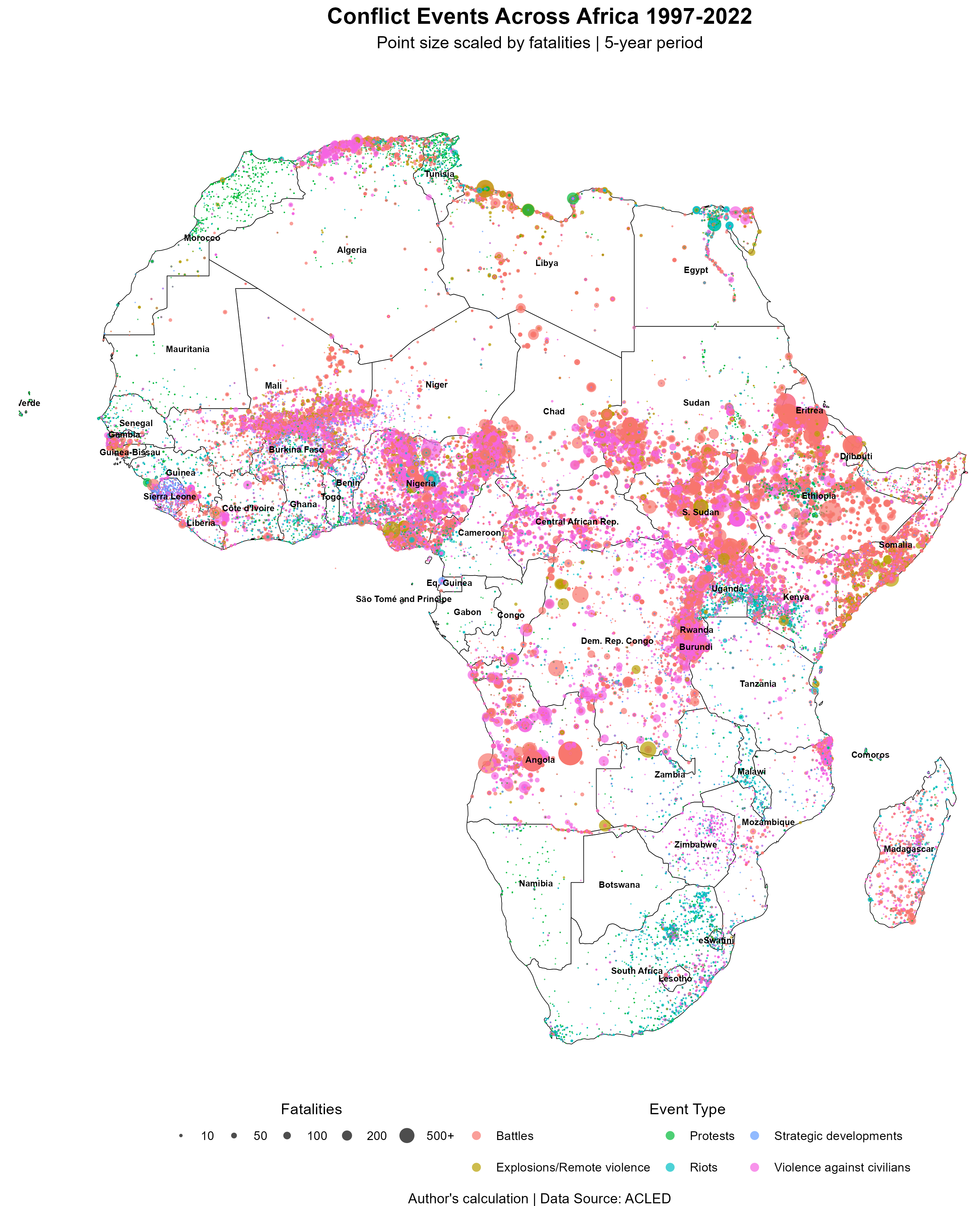
Under the Canopy: Mining and Deforestation in Sub-Saharan Africa
with Raja Chakir and Ahmed Tritah. Available upon request.
📄 See Summary
This study examines the impact of mining on deforestation in Sub-Saharan Africa (2001–2018). Using geospatial data on 14 minerals and a Two-Way Fixed Effects Difference-in-Differences (TWFE-DID) approach, we find that mining significantly increases deforestation, with indirect effects exceeding direct ones and extending up to 80 km from mining sites. Causal mediation analysis identifies key mechanisms, including agriculture, urbanization, infrastructure, and conflict. Results remain robust to global mineral price fluctuations and vary by mine size, mineral type, and ownership structure. Our findings highlight the broad environmental footprint of mining and the need for sustainable policies. Figure: Deforestation rate before/after mining discovered at cell and buffer zone levels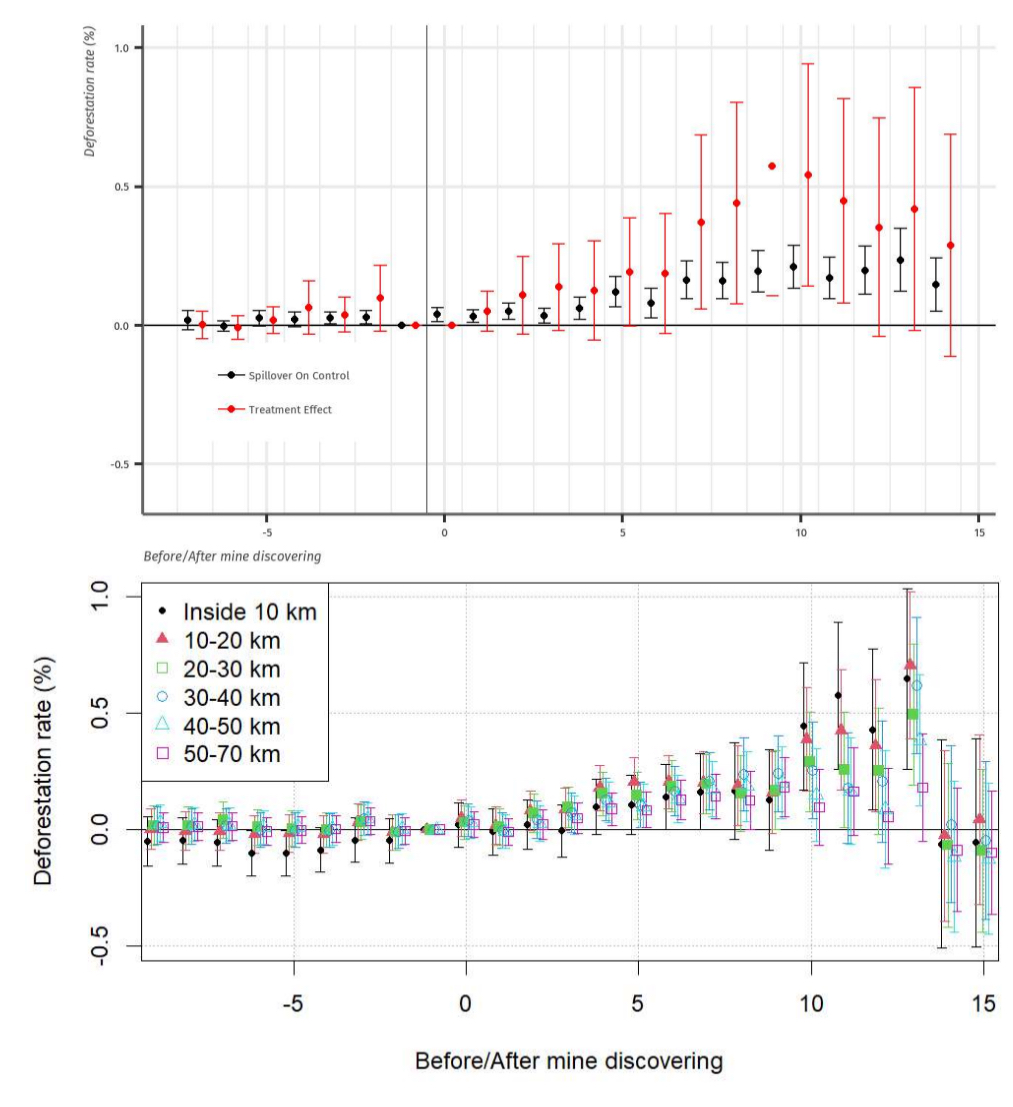
Work in Progress:
Mining, Local Governance, and Urbanization in Sub-Saharan Africa
with Rose Camille Vincent